
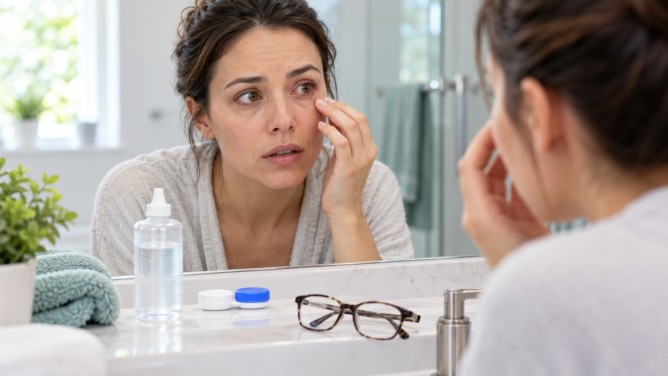
Contact lenses provide a convenient alternative to glasses for those seeking clear vision or a cosmetic change in eye color. However, improper use, poor hygiene, or an incorrect fit can lead to eye irritation and potentially severe complications. Recognizing early warning signs and adopting safe lens-care practices are essential to protect eye health.
Several symptoms can indicate that contact lenses might be causing harm. Persistent redness in the eyes could signal irritation, inflammation, or infection, especially if it continues after removing the lenses. Eye pain is another warning sign, often pointing to corneal damage or an infection that requires immediate medical attention.
A burning or stinging sensation might result from dryness, a poor lens fit, or a reaction to lens-care products. Sensitivity to light can also be concerning, potentially indicating corneal inflammation. Sudden blurring or reduced vision should not be ignored, as these may suggest issues beyond simple lens discomfort.
Excessive watering of the eyes often occurs when they become irritated or inflamed. Similarly, unusual discharge can indicate an infection or inflammation, necessitating a pause in lens wear until cleared by an eye-care professional. Lastly, a gritty feeling as though something is trapped in the eye may suggest dryness or irritation.
If any of these symptoms occur, it’s crucial to remove the contact lenses immediately and seek an eye examination. Continuing to wear lenses while experiencing pain, redness, or light sensitivity could lead to serious infections requiring urgent treatment. Avoid using leftover eye drops without consulting a healthcare provider.
Maintaining good hygiene is vital for safe contact lens use. Washing and drying hands before touching lenses, using the correct disinfecting solution, and avoiding sleeping in lenses without professional guidance are key practices. Lenses should also be kept away from water to prevent exposure to harmful microorganisms.
Regular eye examinations can help ensure contact lenses fit properly and remain suitable for the wearer. Individuals with certain eye conditions, such as severe dry eyes or active infections, should be cautious about lens use. For children and teenagers, maturity and the ability to follow hygiene routines are critical factors for safe lens wear. By adopting these practices, contact lens wearers can enjoy the benefits of clear vision without compromising eye health.
