
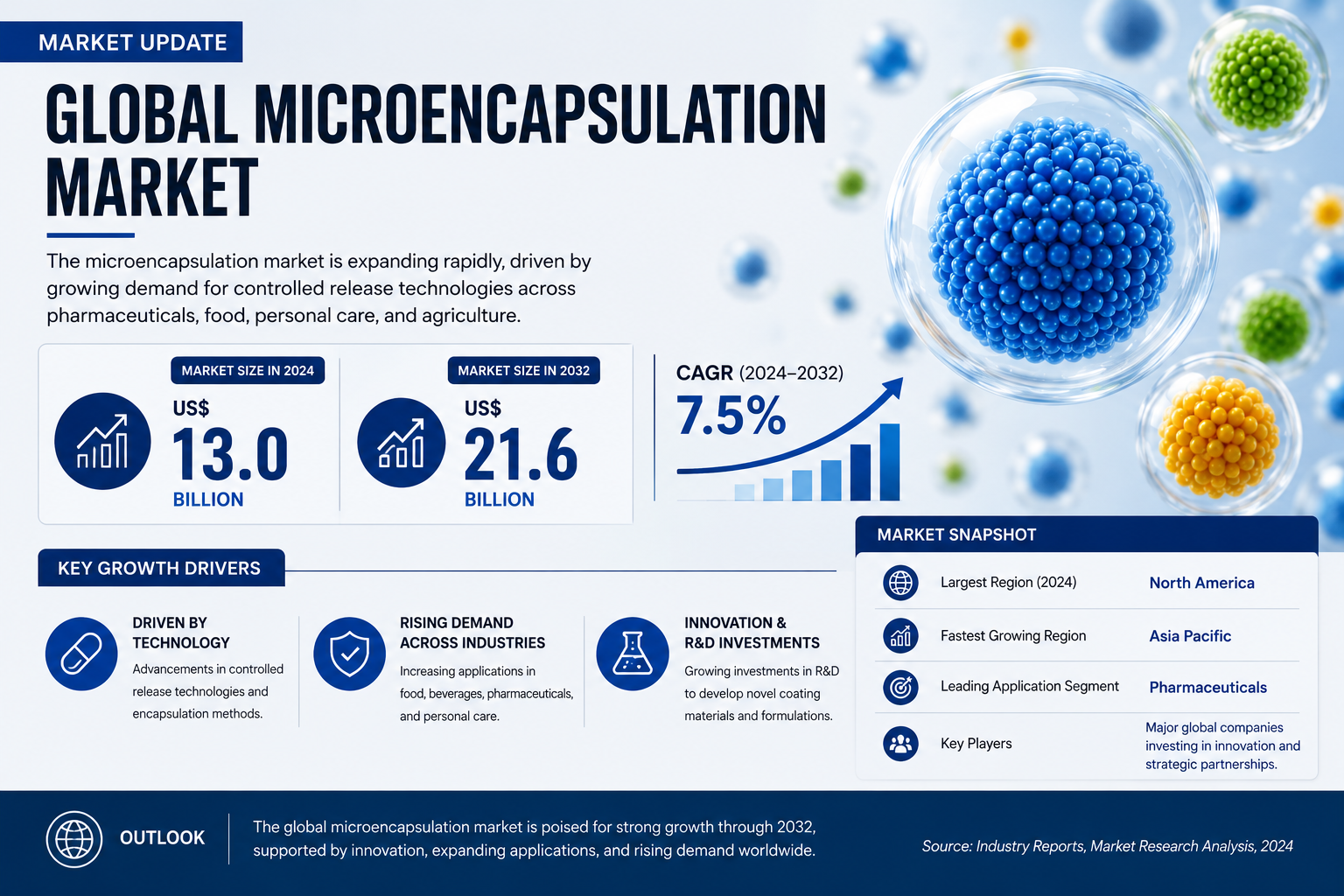
The global Microencapsulation Market is set for significant growth, with its value expected to rise from $13.0 billion in 2026 to $21.6 billion by 2033, marking a robust compound annual growth rate (CAGR) of 7.5% during this period. This expansion is driven by the increasing demand for controlled-release ingredients and enhanced product stability across various sectors, including pharmaceuticals, food, personal care, and industrial applications. As industries focus more on precision delivery systems and product innovation, microencapsulation technology is being adopted widely for its benefits in ingredient protection and improved functionality.
In the food and beverage industry, microencapsulation is gaining traction as manufacturers incorporate encapsulated vitamins, probiotics, and flavors to maintain nutritional value while enhancing taste stability. This technology aligns with consumer preferences for healthier, longer-lasting food products, making it vital for the innovation of functional foods. Similarly, the pharmaceutical and healthcare sectors are capitalizing on microencapsulation for controlled drug release and targeted delivery, driven by increasing healthcare spending and the demand for advanced drug delivery systems.
Microencapsulation is also being embraced in personal care and cosmetic products, with its application in perfumes, skincare, and other home care items. The technology allows for the gradual release of fragrances and ensures the stability of active ingredients, particularly benefiting premium beauty products. Furthermore, advancements in encapsulation technologies, such as coating and emulsion methods, are enhancing production efficiency and quality, while innovations in sustainable and bio-based coating materials are creating new growth opportunities in line with environmental concerns and clean-label trends.
Regionally, Asia Pacific is emerging as a high-growth market, fueled by rapid industrialization, burgeoning pharmaceutical production, and a growing appetite for processed foods. Countries like China, India, and South Korea are making substantial investments in manufacturing and research, positioning the region as an attractive prospect for global players. The agriculture sector is also seeing increased use of microencapsulation in agrochemicals, contributing to more efficient and environmentally friendly farming practices.
The competitive landscape in the Microencapsulation Market is marked by ongoing innovation and strategic collaborations. Major companies such as BASF, DSM-Firmenich, and DuPont are investing in advanced formulations and sustainable materials while expanding regionally to strengthen their market presence. As industries continue to seek improved ingredient protection and product differentiation, the market is poised for sustained growth, driven by the demand for functional foods, personalized healthcare, sustainable agriculture, and premium personal care products.
Legal Disclaimer: The information contained in this article has been provided by independent third-party contributors, clients, or content partners. We do not independently verify the accuracy, completeness, legality, ownership, licensing, or reliability of submitted content, including text, images, videos, trademarks, or other media materials. The submitting party is solely responsible for ensuring that all content, including images and media assets, complies with applicable copyright, trademark, licensing, and intellectual property laws. We disclaim liability for any unauthorized use of copyrighted or proprietary materials by third parties. If you believe that any content published on this platform infringes your intellectual property rights, kindly contact the author above for prompt review and resolution.
